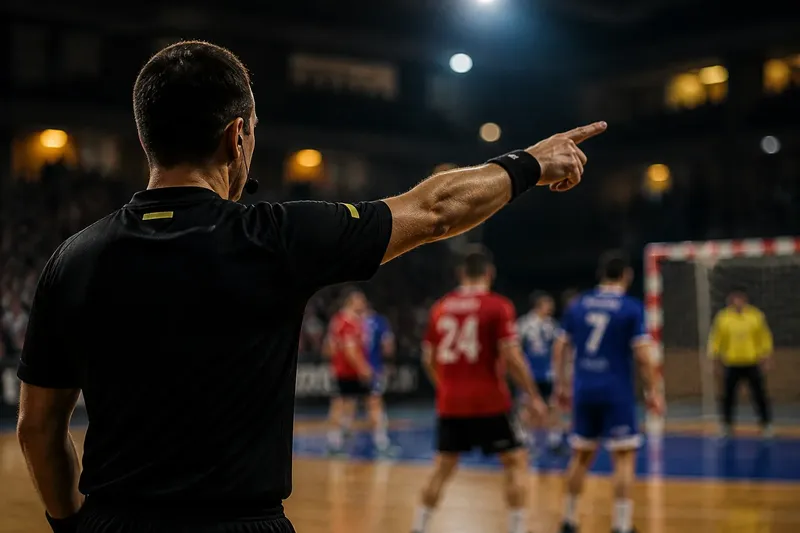
Your First Match as a Spectator: Pick One Thing to Follow
First match spectator tips: follow one visible player, role or repeated action to make unfamiliar play easier to read without learning every rule.
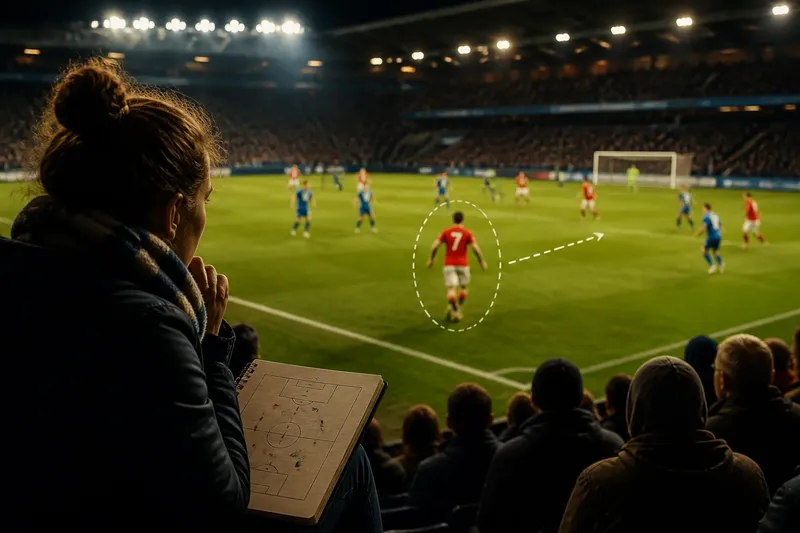
What should you watch at your first match when the ball keeps moving and you do not know the rules? First match spectator tips are simplest when you pick a visible player or role, then follow what they do away from the ball.
You do not need to identify a tactic or work out why a team has changed its approach. Look for an action you can see plainly: a player returning to a spot, raising a hand, or moving towards a line after a pass. That gives your attention a steady place to land.
Follow one player
Choose someone you can recognise by shirt colour, number or position on the field. Watch what they do when the ball moves elsewhere. A defender may stay between an opponent and the goal; another player may move into open space. These movements can help explain how a later pass becomes possible.
Visibility matters more than reputation. If players keep blocking your view, choose someone closer to your side of the field, or ask a companion to point out a player who stays in view. You can also use a printed team sheet if one is available and you want to connect a shirt number with a name.
Say you are watching an unfamiliar court sport and choose a player near the centre. After they pass, you see them move towards an open lane. The next time they pass, you look for the same movement; if it is easy to spot, keep following that player, and if they disappear in the crowd, switch to someone clearer.
Choose the player you can actually see.
Track one role
A role can be easier to follow than a particular person. You might watch a goalkeeper, catcher, setter or another position that is visually distinct. If a substitute takes over, the same job remains available to follow.
Ask yourself what that role appears to do for the team. A goalkeeper’s position may show which part of the goal they are guarding; a setter’s touches may precede a teammate’s attack. You do not need the official name for every movement. Just notice what happens around the role.
Your seat can shape what is easiest to see. A broad view may reveal how a player moves across the field, while a seat near one end may give you a clearer view of positions around a goal. If the role slips out of sight, switch to a nearby player rather than trying to track it blindly.
Follow the job, not the name on the shirt.
Notice a visible repeat
Pick a repeated action with a clear beginning and end, such as a serve, a throw-in or the way a player returns to a mark after play stops. You do not need to know its official name. Notice who starts it, where nearby players move and what happens next.
Imagine you are watching a game with a sideline restart. At the first restart you can see, you notice one player step close to the line and another move into open space. At the next restart, you watch for those same movements; if they recur, keep that as your thread, and if not, choose a more frequent action, such as how possession changes hands.
Keep the observation simple. You are not judging technique or deciding whether an official made the right call; you are noticing a sequence you can see.
One clear repeat can anchor a spell of play.
Use pauses wisely
A stoppage, substitution or break in play gives you a natural moment to reset. Find your player again, look for the role, or wait for the repeated action to happen. If you missed a moment, let it go; another chance may come.
If you are with a friend, ask one small question during a pause: “What does that player do when the ball goes wide?” A short answer can help you keep watching without turning the match into a lesson. You can also leave the question open and return to your chosen detail.
Use a pause to start fresh, not to catch up on everything.
Change your focus
Your first choice is a starting point, not a promise. A player may be substituted, a role may be hard to distinguish, or an action may happen too rarely to notice. Switch to something more visible whenever your current focus stops helping you follow play.
Imagine you begin by following a player in a bright shirt. A substitution makes it hard to tell who has taken their place, so you switch to the position they occupied. You then notice that its player repeatedly moves towards the sideline before an attack. The position is now your clearer thread, and you can keep watching without identifying every player.
Change focus when another detail becomes easier to see.
What should you watch?
Should I watch the ball or a player?
Watch the ball if you can follow it comfortably. If you lose track of how a move begins, shift your attention to one visible player for a spell.
What if I do not know the positions?
Ask a companion to name a role you can see, or choose a player by shirt colour or number. Watch how teammates and opponents respond to them to get a sense of the role.
When should I ask questions?
A break in play is usually easier than asking over the action. Ask about one movement you just saw rather than requesting an explanation of the whole sport.
Do I need to know every rule?
No. Knowing how a team scores can help, but you can follow visible movement without understanding every call. Ask about a ruling during a pause if it matters to what you are watching.
A useful first focus
At your first match, choose the easiest visible thread: a player, a role or a repeated action. Keep watching it while it remains clear, then change focus if it does not. These first match spectator tips are meant to make play easier to follow, not to turn the afternoon into an assignment.
Afterwards, keep one question that came to mind. At another match, that question can help you notice a different player or movement without needing to learn everything at once.