Why Boundaries Make a Game Easier to Read
Why boundaries make a game easier to read: see how lines, objects and agreed edges clarify live play, settle close calls and help everyone share the same space.
Why do players stop when the ball crosses a painted line, even if it is still within reach? Boundaries make a game easier to read by showing where play counts and where it does not. A chalk mark, a pair of cones or an agreed edge gives players and viewers a shared reference, so they can follow the action without guessing what the playing area means.
That reference does more than divide a field from its surroundings. It sets expectations: which space is active, what happens when the ball leaves it, and how play resumes. Once those expectations are clear, players can commit to a move instead of pausing to negotiate every close moment.
What does a boundary decide?
A boundary identifies the area in which the game is being played. Depending on the rules, crossing it may stop play, change possession, award a point, or simply require the ball to be brought back in. The marking itself does not decide which consequence applies; the game’s rules do.
It helps to separate the edge from the ruling. The edge tells everyone where the playing area ends. The ruling explains what follows when a player or ball reaches that edge. A tennis court’s painted lines, for instance, define the court, while the rules say whether a ball landing on a particular line counts as in. Other games treat a ball touching the line as out, or use a different convention altogether.
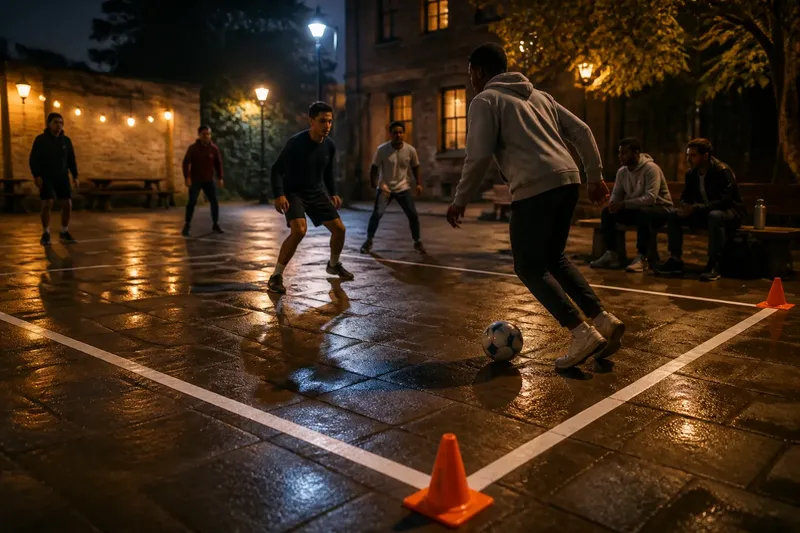
Players need this distinction because an edge can look obvious while its meaning is not. If a group agrees that a ball must cross the whole line before it is out, that convention differs from one where touching the line is enough. Say a group setting up a casual courtyard game agrees that the paving seam marks the side edge and that a ball touching the seam stays in. The action is easy to judge because both the marker and its meaning were settled before play.
Agree on what the boundary means, not just where it sits.
Why do lines matter?
Lines make a boundary visible from a distance. A painted stripe can be easier to track than the edge of a patch of grass, and it can define a precise area without putting an obstacle in the path of play. Courts and marked pitches often use lines for more than the outer edge: internal lines may divide zones, mark service areas or distinguish where a particular action is allowed.
That precision also asks more of players. A ball can appear to sit on a line, and a player moving quickly may obscure the view. The rules must therefore say whether the line belongs to the area it marks and who makes a close call. In informal play, players may agree to call their own side; in organised play, the game’s procedures assign that responsibility differently.
Lines are most useful when they can be seen from the places where decisions happen. A faint mark, a line hidden by leaves, or several intersecting markings can leave players unsure which edge applies. Before a casual game begins, walk around the area and check that the intended lines stand out against the surface.
What if there is no line?
A boundary can be marked by objects or by an agreed feature of the space. Cones can mark the corners of a temporary playing area; a wall, a fence or the edge of a lawn may serve as an existing limit. The important part is that players can identify the same edge, not that it has been painted.
Objects work well when a space needs to be rearranged or when marking the ground is impractical. But a cone marks a point, not automatically the route between points. Players should agree whether an imaginary straight line joins the cones, whether the space around each cone counts, and what happens if a cone moves during play. Those details prevent a marker from becoming a fresh argument.
An agreed edge can also be useful where a court has no clear physical limit. A group might use the line between two benches as the back edge, or treat a change in flooring as the side. In either case, the edge should be stable and easy to point out. If it shifts with a player’s interpretation, it is not doing its job.
For a temporary game, use distinct markers at the corners and name the edge they define.
How do boundaries shape play?
Knowing where play counts affects the choices players make. A runner near a sideline may turn inwards rather than risk stepping out. A player with the ball may use the edge as a limit on where a pass can go. Those choices become part of the game because the boundary is a dependable feature, not a surprise introduced after the action.
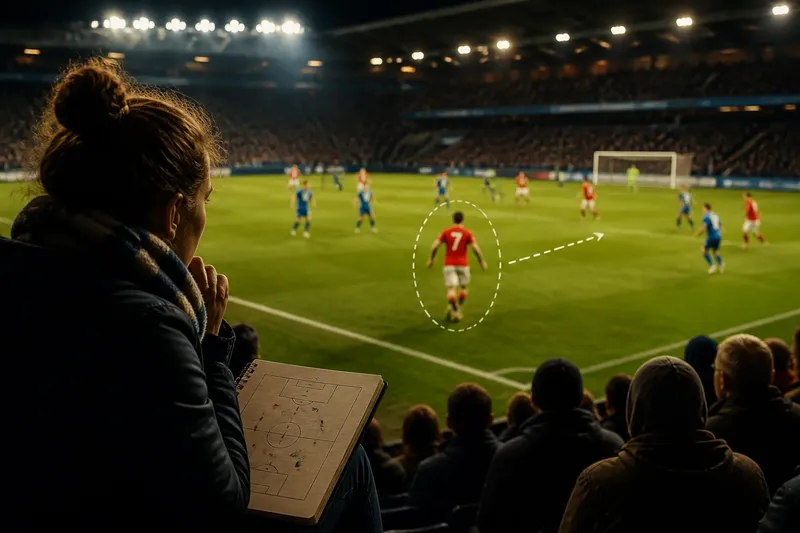
Boundaries also make the playing area legible to people who are not taking part. A viewer can see whether a ball has crossed an outer edge and understand why the action pauses. Internal markings can show why players gather in one section or why some positions are restricted. The markings do not explain every rule, but they give observers a visual map to work from.
Shape matters, too. A narrow area tends to bring players into contact more often than a broad one, while an irregular edge can create awkward angles and uncertain calls. That does not make one layout universally better: a group may be working with a limited space, or a format may call for a particular shape. It does mean that boundaries influence the feel of play before anyone has touched the ball.
How should players handle close calls?
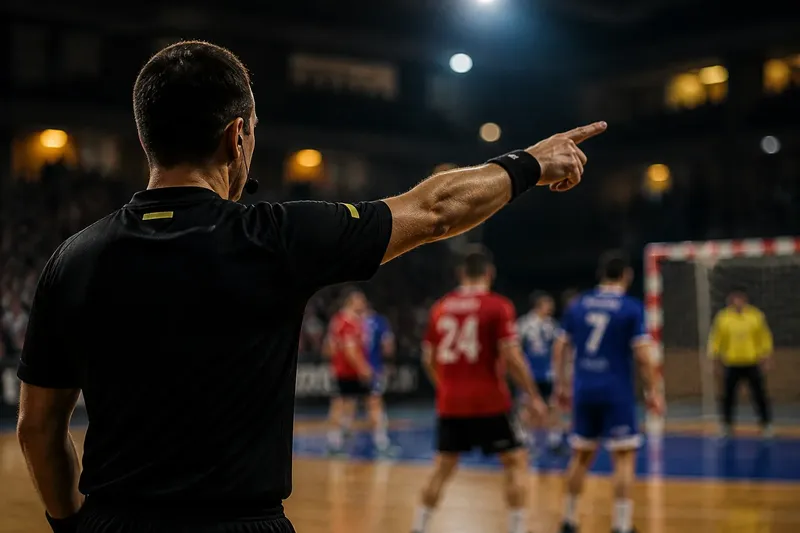
Close calls are easier to manage when the group has agreed in advance how to judge them. A game may give that decision to an official, to a player responsible for a particular section, or to the players involved. In a casual setting, the group can agree on a simple convention, such as replaying a point when no one had a clear view. The right choice depends on the game and the people playing.
When a call is disputed, it helps to refer to the rule and the marker rather than to confidence or volume. Ask which edge applies, whether the line itself counts, and what the agreed procedure says. A calm, brief explanation can settle the question and return attention to play.
Imagine a neighbourhood game using two bags as the corners of a makeshift end line. A ball lands near one bag, and players disagree about whether it crossed the edge. If they had agreed that an imaginary line joins the bags and that the ball must pass fully beyond it to be out, they can apply that shared rule to the landing. If no convention was set, a quick group decision before the next point is more useful than pretending the marker supplied an answer by itself.
Where a formal rulebook or organiser specifies how a boundary is marked or judged, follow that wording rather than substituting a local convention.
Why do games treat lines differently?
There is no single boundary convention shared by every game. Some count a ball touching a line as in because the line forms part of the marked area. Others treat the line as outside, or use a rule that depends on which line is involved. The same visual event can therefore have different meanings in different games.
It is also possible for a boundary rule to refer to a player rather than the ball. A player may be allowed to stand beyond an edge while the ball remains in play, or stepping outside may itself affect the action. Knowing what object or person the rule refers to prevents a common confusion: seeing someone cross a line does not always mean the ball has gone out.
When trying a new game, ask what crosses the boundary, what counts as crossing it, and what happens next. Those questions usually reveal the practical meaning faster than memorising the layout alone.
What should you agree before play?
A short boundary conversation can save repeated pauses, especially in a park, playground or shared hall where the playing area is improvised. Confirm the outer edges, name any internal markings that affect play, and say what happens when the ball or a player crosses them. Make sure everyone can see or identify the chosen markers.
- Outer edge: Point out each side and end of the playing area.
- Line meaning: Decide whether touching a line counts as in or out, if the game leaves that open.
- Ball or player: Clarify what must cross the edge for play to change.
- Markers: Say whether cones, bags or other objects mark corners, points or a whole line between them.
- Close calls: Agree who decides, or what the group will do if no one can tell.
- Changed markers: Decide how play pauses and resumes if an object moves or a line becomes hard to see.
This is not a substitute for the rules of a formal competition. It is a way to make a casual game readable to everyone who joins, including someone who arrives after the space has been set up.
Which boundary questions matter?
Does the line count as in?
That depends on the rules of the game. Some games include the line within the playing area, while others treat it as outside; check the specific rule before making a close call.
Is a ball out as soon as it touches the edge?
Not necessarily. A game may require the ball to cross the boundary fully, or may define a different point at which play changes.
Can cones mark a proper boundary?
They can mark a temporary edge when players agree how the space between them is understood. For a formal match, use the boundary marking and procedure required by its rules.
What happens if nobody saw the call?
Use the game’s established procedure if there is one. In informal play, the group can agree on a fair response, such as replaying the point, rather than turning uncertainty into a dispute.
Why shared edges help
A boundary makes a game easier to read when it gives everyone the same answer to a practical question: where does this action count? Lines, objects and natural edges can all do that work, provided their location and meaning are clear. The markings shape movement, help viewers follow play and give close calls something more solid than instinct to refer to.
So when you join a game with a painted stripe, a row of cones or no obvious line at all, look for the shared convention behind it. If the edge is unclear, ask before the next point begins. A small clarification can keep the space welcoming and the play moving.