From Whistle to Hand Signal: How Officials Communicate
Understand how officials’ hand signals clarify calls when a whistle is missed, so you can follow the restart and its direction without guessing.
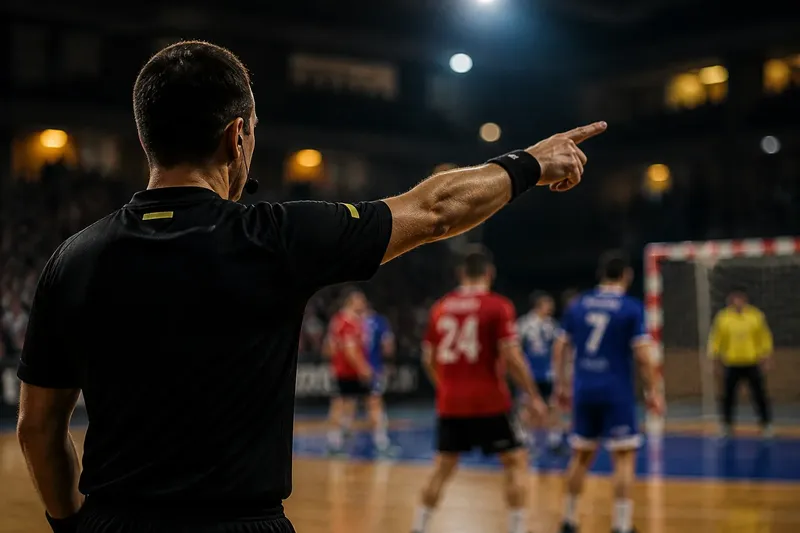
What does an official’s signal mean when you miss the whistle? In many sports, a whistle stops play and a hand signal communicates a decision, direction or restart. The meaning varies by sport and competition, so read the gesture alongside what happens next.
A whistle can cut through the noise, but it carries little detail. A hand signal makes some of that detail visible to players and spectators. In some games an official also speaks; in others, the gesture is the clearest public explanation.
Whistle and gesture
Officials often use sound to interrupt play, then use gestures to identify a call or show how play should resume. A point may indicate direction or possession. A raised arm or another recognised movement may identify a particular kind of stoppage. The conventions are sport-specific, so a familiar-looking gesture does not always mean the same thing everywhere.
To understand a call, notice the pause, locate the official and read the signal. Then check how play restarts. A whistle alone rarely explains the whole decision.
Missed whistles
Problem: Play has stopped, but you did not hear why.
Likely cause: Crowd noise, music or nearby action may have masked the whistle. The official may also be far from your seat.
What to do: Look for the official’s gesture and position. Then notice which team prepares to restart and where the ball or other equipment is placed. Those details show the call’s practical effect without requiring you to guess the exact offence.
Players may appeal or react emotionally. Give more weight to the official’s settled signal and the restart that follows.
After a sudden pause, find the official before interpreting the call.
Unclear gestures
Problem: You see an arm movement but cannot tell whether it indicates a foul, direction or restart.
Likely cause: Gestures can be difficult to see from a distance, and similar movements may mean different things across sports. An official may also be managing players rather than announcing a ruling.
What to do: Consider the situation that preceded the gesture. Was the ball already out of play? Did contact occur? Where is the official pointing, and how do players set up afterwards? Treat your interpretation as provisional until play resumes.
If you are new to a sport, consult its rules or competition guide for common stoppage and restart signals. A broadcaster’s graphic can help, but check that it applies to the match you are watching.
Officials’ signals in context
Imagine you are watching an unfamiliar indoor match. A whistle sounds, but you cannot hear an announcement. An official points towards the far end, and players there prepare to restart. You can conclude that the restart is going in that direction, but not necessarily name the offence. Watching the restart confirms the practical consequence while leaving the finer ruling open.
Keep the signal and your interpretation separate. A point may show where play is going without explaining every detail behind the decision.
Apparent disagreements
Problem: Two officials appear to give different signals, or one gestures while another is still moving.
Likely cause: Officials may have different responsibilities and viewpoints. Their gestures can also happen in sequence, making a brief difference look like a disagreement.
What to do: Wait for the officials to settle and play to resume. Notice whether they confer or change the decision, and follow the official controlling the restart. A momentary movement is not always the final ruling.
Officials’ duties vary between sports and competitions. Their signals are best understood as part of a shared process, rather than as a contest between individuals.
Hidden signals
Problem: A player, assistant or spectator blocks your view of the gesture.
Likely cause: Officials work close to active play, and bodies can obscure a signal from some seats or camera angles.
What to do: Look for the next visible cue: the restart’s direction, the official’s position or the players’ setup. A replay or caption can offer extra context, but broadcast information may simplify or arrive later than the live signal.
Follow the restart rather than trying to recover every detail of a gesture you could not see.
Why signals help
Not everyone hears the whistle equally well. Players are close to the official, while spectators sit at different distances and broadcasts carry crowd noise unevenly. A visible gesture gives people another way to understand a stoppage.
A signal can also make the immediate consequence clearer. A point may show the direction of play, while a recognised gesture can identify a type of restart. The whistle interrupts; the signal adds information. Neither necessarily explains every detail of the ruling.
Questions about signals?
Does every whistle mean a foul?
No. A whistle can stop play for an infringement, a restart procedure or a safety-related pause. Look for the signal and the way play resumes.
Why do officials point after stopping play?
Pointing often shows direction or which side receives a restart. Its exact meaning depends on the sport and situation, so check how the ball and players are positioned.
Can a signal explain the whole decision?
Sometimes a gesture identifies a call clearly; sometimes it communicates only the immediate consequence. Direction or restart type may be visible even when the reason behind the ruling is not.
Where can I learn a sport’s signals?
Start with the sport’s official rules or competition guide. A broadcast explanation can help too, provided it applies to the competition you are watching.
Checking the call
When the whistle is missed or a gesture is unclear, use these checks to decide what you can reasonably infer:
- Observe whether play has stopped; if it has, look for an official’s signal, but if play continues, do not assume a whistle or call occurred.
- Check whether an official points towards a team or end; if the direction is clear, follow where the restart goes, but if it is obscured, wait for the setup.
- Notice whether the ball or other equipment is being placed for a restart; if so, use that location as evidence of the practical decision, but if not, wait for play to organise.
- Look for an official’s raised arm or other recognisable gesture; if you know it from the relevant sport’s rules, apply that meaning, but if you do not, consult the competition guide rather than guessing.
- Watch whether officials confer; if they settle and one controls the restart, treat that as the current decision, but if they continue communicating, wait before settling on an interpretation.
- Check whether a broadcast caption or replay is available; if it clarifies the call and matches the competition, use it as supporting information, but if it conflicts with the live sequence, avoid treating it as definitive.
Understanding officials’ hand signals comes from connecting a gesture to the restart, not from deciding what a whistle must have meant. If a local rule or competition procedure changes a signal’s meaning, consult the relevant rules or ask a qualified official.